


.svg)
%201.svg)

.svg)
Service accounts, API keys, certificates, and AI agents now outnumber your people many times over — most carrying credentials no one audited and no clear owner. Axiad Mesh governs every identity as one: ranked by the risk it actually carries, not the category it falls into.

.svg)


Machines and AI agents outnumber your people many times over — service accounts, API keys, certificates, service principals, managed identities, runners. Most carry standing credentials nobody audited, and most have no owner at all. An identity program that only really governs humans is protecting a fraction of the environment.
Humans live in your IGA. Machines hide across secrets managers, PAM, and cloud. AI agents don't have a home yet. Each type gets governed by a different team, with a different tool, on a different clock — so the risk that spans them never gets owned end to end. Attackers move through exactly those seams.
AI agents are being created faster than anyone can inventory them, acting autonomously with credentials no one reviewed. When the person who created an agent leaves, the agent often keeps running — an orphaned identity with real access and no one accountable for it.

.svg)
.svg)
One model for human, machine, and AI-agent identities — organized around risk.

Mesh discovers and continuously watches every identity across your environment — people, service accounts, API keys, certificates, service principals, and AI agents — and connects the accounts, credentials, and entitlements that belong to each, even when 18 systems spell the same identity 18 different ways. No agents to deploy, no rip-and-replace.

You don't have a human problem, a machine problem, and an agent problem — you have an identity-risk problem. Mesh applies one governance model across every identity type, so a risky service account and a risky privileged user are ranked side by side, on the same scale, by the same team.
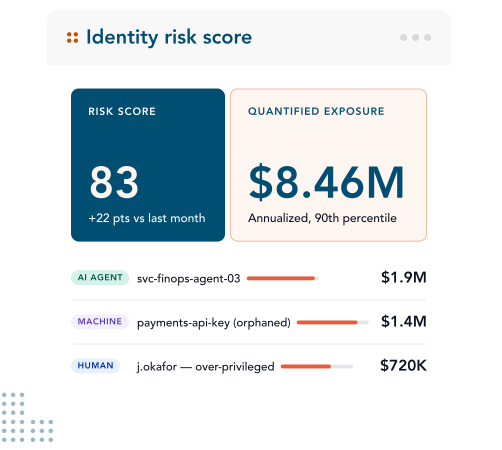
A list of identities isn't risk. Mesh scores each one by the impact if it were compromised — quantified in dollars for human and AI-agent identities using the methodology your board and cyber-insurance conversations already speak, and by blast radius where a dollar figure doesn't fit. When you can see what a gap would cost, budget finally follows risk.

Findings don't reduce risk; owned fixes do. Mesh assigns an owner to every identity — including the machines and agents that never had one — routes the right fix into the tools your teams already run (ServiceNow, IGA, PAM), and tracks it to closed against your compliance and program deadlines.
The fastest-growing identities in your environment are the ones you see least. AI agents spin up with credentials no one audited, act at machine speed, and keep running long after the people who created them are gone. Mesh discovers every agent, quantifies the risk it carries, and gives it an owner — so your newest identities are governed like your most privileged ones.
.svg)
.svg)
.svg)

AI agents and machine identities are being created faster than any central team can track — often outside IT entirely. Mesh correlates identity signal across your identity providers, endpoints, and cloud to surface the agents, service accounts, and credentials no one registered, then quantifies which ones actually carry risk. The identities acting fastest in your environment stop being the ones you see least.
.svg)
When a person leaves, their accounts get deprovisioned — but the service accounts, API keys, and AI agents they created keep running, with real access and no owner. Mesh flags orphaned non-human identities the moment their human owner is gone, quantifies the risk each one carries, and routes it for reassignment or shutdown before an attacker finds it first.

Every merger means inheriting another organization's identities — human, machine, and agentic — most of them undocumented and unaudited. Mesh gives due-diligence and integration teams a complete, risk-ranked picture of what they're taking on, so hidden exposure surfaces at the negotiating table instead of after the deal closes.

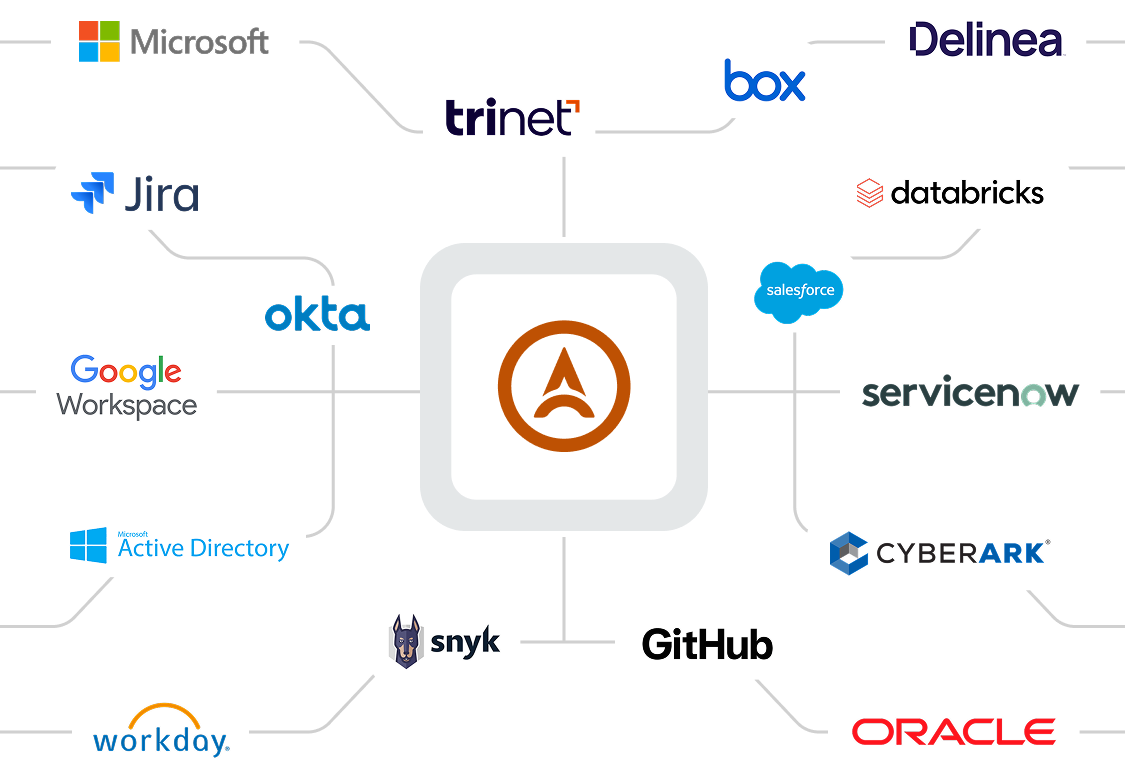
Mesh sits on top of the stack you already have and reads from it — identity providers, HR systems, cloud platforms, secrets managers, PAM, and ticketing. It correlates one identity across all of them. No rip-and-replace, no agents to deploy on every endpoint.
.png)

.png)
.svg)

.png)
.svg)


.svg)








.svg)