


.svg)
%201.svg)

Every quantum-vulnerable certificate and key is attached to an identity. Most organizations can't see those connections, so they can't plan a migration that holds up. Axiad Mesh builds a continuous inventory of your cryptographic assets, ties each one to the identity and system that owns it, and prioritizes what to fix first by blast radius.

.svg)

Migrating to post-quantum cryptography isn't about choosing new algorithms. The real challenge is understanding everything that needs to change.
Most organizations already know they'll need to adopt ML-KEM and ML-DSA. What slows them down is the lack of visibility into their cryptographic environment. They can't see every certificate, key, algorithm, or the identities connected to them.You can't build a migration plan for an environment you can't fully see.

.svg)
.svg)
Before a PQC migration plan means anything, three problems usually need to get fixed first.

Most organizations cannot answer a basic question: where is every certificate, key, and cryptographic algorithm in use? Certificates are renewed without tracking the algorithm, and keys remain in forgotten systems. Without a complete inventory, it's impossible to identify what is exposed when today's encryption becomes vulnerable.

Attackers are already collecting encrypted data today, expecting to decrypt it once quantum computing makes it possible. Information protected by today's standard algorithms, including RSA and ECC, is already at risk, making this a current threat rather than one that begins after Q-Day.

Certificate and key management is spread across teams, tools, and vendors, leaving no single owner with full visibility. Without continuous, identity-based visibility, organizations can't accurately map certificates and keys to the systems, applications, and service accounts they protect, delaying quantum-safe migration planning.
Axiad Mesh gives you a structured path to post-quantum cryptography readiness, built around three stages that mirror how security teams actually need to work. This isn't a one-time scan. It's ongoing visibility that keeps working as your environment changes, which is the only way a PQC migration plan stays accurate past the day you wrote it.
.svg)
.svg)
.svg)

.svg)
Build a complete, continuously updated inventory of cryptographic assets across your environment
Identifies certificates, keys, and algorithms in use, and ties each one to the identity or system that owns it
Understand which weaknesses actually matter, not just which ones exist
Scores cryptographic risk by exposure and blast radius, so you fix what's actually dangerous first
Move from a list of problems to a migration plan with clear ownership
Routes findings to the right owners and tracks remediation as your environment moves toward quantum-safe standards
After evaluating vendors for six months, they chose Axiad to help identify cryptographic risk across 1.2million+ elements, seven workstreams, and connect that risk to ownership and business impact.

We finally had a way to see what we actually owned, not just what we thought we owned.
.svg)
Quantum risk doesn't land the same way everywhere. Here's how it shows up across the verticals Axiad works in most.
.svg)

Long-lived financial data is a prime target for harvest-now, decrypt-later attacks. Mesh identifies quantum-vulnerable encryption so teams can prioritize migration before regulators or auditors ask.
.svg)
Underwriters are beginning to factor cryptographic posture into risk pricing. A documented PQC readiness inventory gives insurance organizations a defensible answer when that question comes up.
.svg)
Operational technology and long-lifecycle infrastructure often rely on encryption that can't be replaced quickly. Mesh reveals those dependencies before they become a costly migration.
.svg)
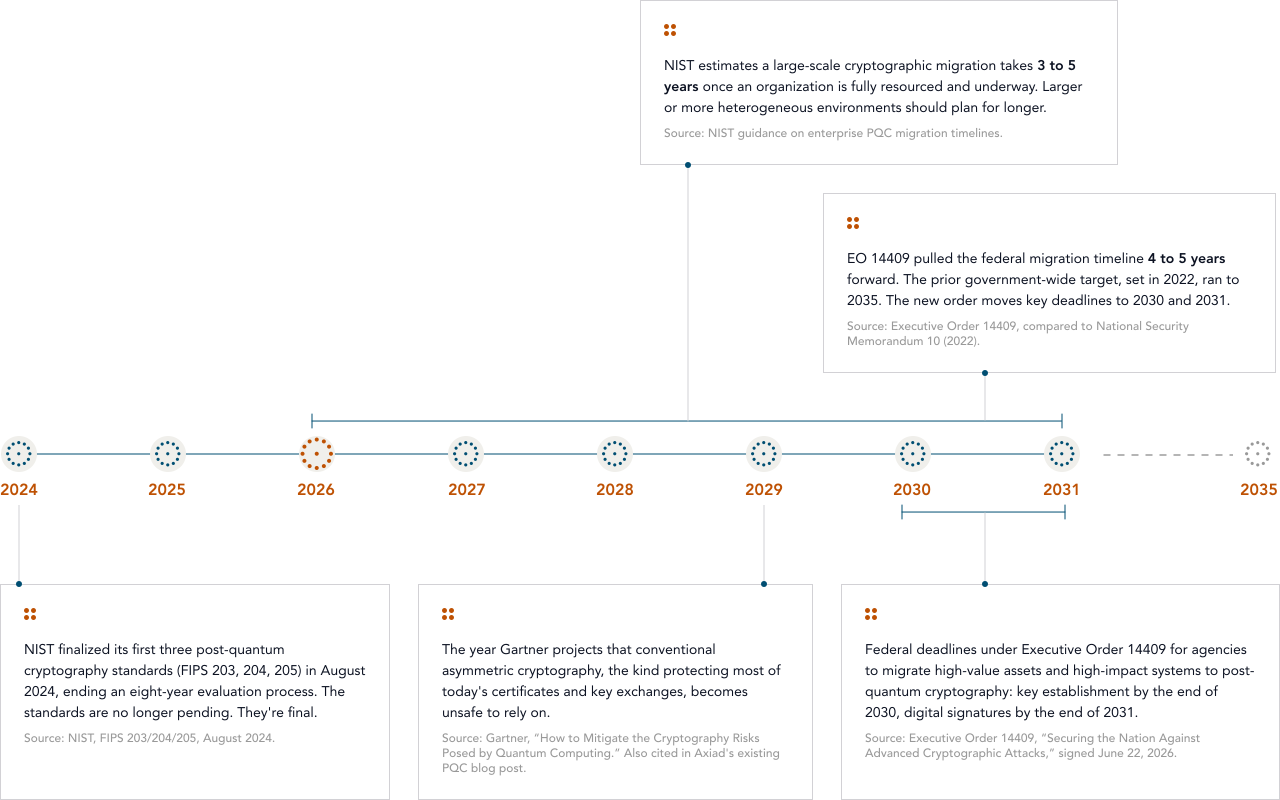
EO 14409 requires agencies to migrate high-value assets by 2030, digital signatures by 2031, and appoint a migration lead within weeks. Mesh maps every certificate and key to its owner and system, revealing exposure.


The original explainer on harvest now, decrypt later and how to check your own domains. Links to the free Readiness Tester.
.svg)

The original explainer on harvest now, decrypt later and how to check your own domains. Links to the free Readiness Tester.

Breaks down Executive Order 14409 and argues the near-term migration-lead requirement matters more than the 2030 date most coverage focused on.
.svg)
Post-quantum cryptography readiness is the state of being prepared to migrate an organization's encryption, certificates, and key exchange methods to algorithms that can withstand attacks from quantum computers. It starts with knowing what cryptographic assets exist across an environment, then prioritizing and replacing the ones at greatest risk.
Attackers can collect encrypted data today and decrypt it later once quantum computing makes today's encryption breakable, a tactic known as harvest now, decrypt later. NIST has already finalized post-quantum cryptography standards, and federal mandates like CNSA 2.0 set firm migration deadlines, so the planning and inventory work needs to happen well before quantum computers are widely available.
Harvest now, decrypt later describes the practice of intercepting and storing encrypted data today with the intent to decrypt it once quantum computing capabilities make that possible. It means data encrypted with today's standard algorithms, like RSA and ECC, may already be exposed even though no quantum computer can break it yet.
A cryptographic inventory is a complete record of the certificates, keys, and encryption algorithms in use across an organization's systems, along with which identity or application owns each one. It's required for post-quantum cryptography migration because organizations cannot plan a realistic transition to quantum-safe algorithms without first knowing what they currently have and where it lives.
NIST finalized its first set of post-quantum cryptography standards covering key encapsulation and digital signatures, including ML-KEM, ML-DSA, and SLH-DSA. These standards define the quantum-resistant algorithms that organizations are expected to migrate toward as they replace RSA and ECC-based cryptography.
Organizations preparing for post-quantum cryptography typically need tools that can discover cryptographic assets across their environment, tie those assets to identity and ownership, and prioritize remediation based on risk. Axiad Mesh provides this through continuous discovery, risk scoring, and a free domain-level readiness check anyone can run without installation.
.svg)


.svg)








.svg)
.svg)
.svg)