.svg)
%201.svg)

Machine identities now outnumber your people more than 100:1 and most carry standing credentials no one audited. Axiad Mesh connects every identity into one picture, ranks the paths that matter, names the owner, and routes the fix into the tools you already run.
.svg)

.svg)


Every service account, API key, certificate, and workload is another credential that can be stolen, and another step an attacker can take once inside. They multiplied faster than any team could map how they connect, who owns them, or what breaks if one is compromised.
63.5% of security leaders say they have a complete, real-time picture of identity risk. 57% still cannot assess the blast radius of a compromised account in real time. The problem is no longer that you can't see your identities. Your discovery, posture, and ITDR tools already surface them by the thousand, all flagged critical. The gap is the decision above the findings: which of them actually matter, what they would cost if you are wrong, and who fixes them.
of security leaders say they have acomplete, real-time picture of identity risk.
still cannot assess the blast radius of a compromised account in real time.
Risk does not sit inside any single account. It sits in the paths between them. A user protected by a FIDO2 authenticator in one system, who signs in to another with only a password, is only as safe as that password once an attacker has it. A list of accounts cannot surface that relationship. The teams pulling ahead stop counting identities and start ranking the handful of paths that can actually reach something that matters.
.svg)
.svg)
One correlated picture across human and non-human identities, organized around the risk inthe spaces between them.

Correlation is a judgment, so Mesh keeps it transparent: strong matches are grouped automatically, weaker ones are flagged for a person to confirm, reject, or delegate. You get one picture you can trust, not another inventory to triage. No agents to deploy, no rip-and-replace.
.svg)
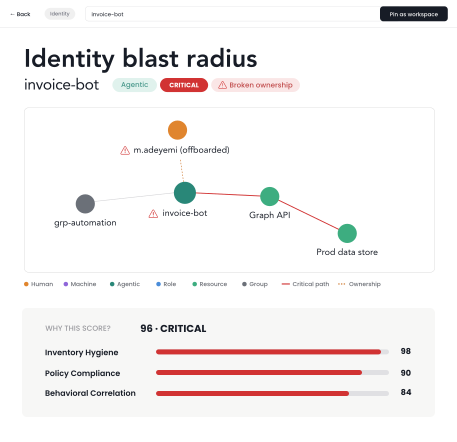
A list of accounts is not a risk picture. For every correlated identity, Mesh maps what it can reach, what depends on it, and what an attacker inherits if it falls. That is the blast radius, and it is the difference between a discovery tool that stops at the finding and a decision layer that tells you which paths to close first.
.svg)
A risky service account and a risky privileged user should not live in two tools with two different scores. Mesh scores every identity in one model, ranked by what it would cost the business if compromised, directional and defensible rather than a severity color. When a machine identity and a human land side by side on the same list, the top of the list is the top of the list.
.svg)
Findings don't reduce risk; owned fixes do. Mesh assigns an owner to every risky path and every orphaned identity, including the machines and service accounts that never had one, then routes the fix into the systems your teams already run, like ServiceNow, IGA, and PAM. It keeps score until exposure comes down, so risk closes instead of turning into tickets no one owns.
Anyone can hand you a longer list. The value is in the connections a list can't show: the same identity spelled eighteen different ways across eighteen systems, the orphaned service account no team will claim, the low-friction path an attacker walks from a forgotten key to something that matters.
.svg)
.svg)
Multiple IAMs, PAMs, and IGAs that don't talk to each other leave the same identity fragmented across all of them, and the risk that spans them never gets owned end to end. Mesh correlates one identity across every system that holds a piece of it, so you can finally see risk by person, team, and function instead of per account.
non-human identities correlated at one global insurer, against roughly 40,000 the team expected.
When a person leaves, their accounts get deprovisioned, but the service accounts, API keys, and workloads they stood up keep running with real access and no owner. Mesh flags orphaned non-human identities, ranks each by the risk it carries, and routes it for reassignment or shutdown before an attacker finds it first.
You do not have time to close every finding, and you don't need to. Mesh ranks the handful of paths that can actually reach something that matters, ties each to an owner, and tracks the reduction, so you can show the blast radius on your top ten paths coming down quarter over quarter.
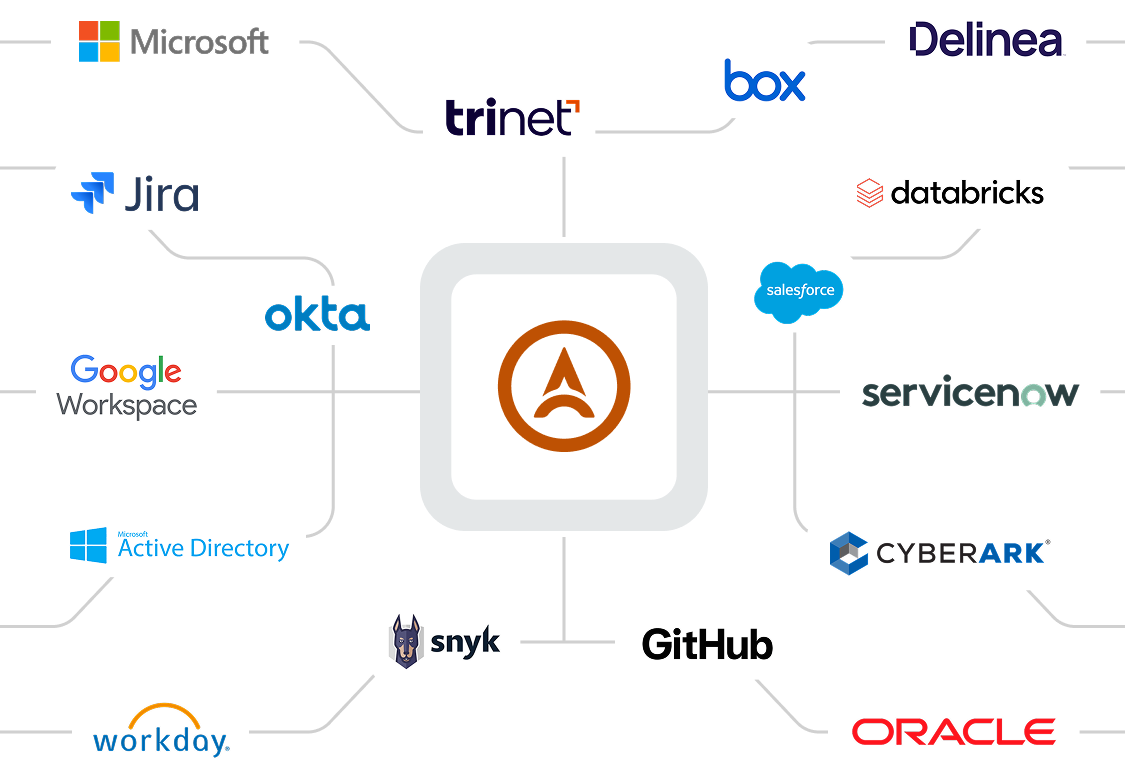
Mesh sits on top of the stack you already have and reads from it — identity providers, HR systems, cloud platforms, secrets managers, PAM, and ticketing. It correlates one identity across all of them. No rip-and-replace, no agents to deploy on every endpoint.
.png)


Visibility gaps created by disconnected tools and isolated silos expose organizations to an unmonitored identity attack surface. Read Gartner's guidance on using visibility, observability, and remediation to close it — courtesy of Axiad.
.svg)
.png)
Almost every enterprise has a fast-growing, poorly defended attack surface: its identity ecosystem — and most of it isn't human. This guide shows how security teams are identifying, quantifying, and governing every identity their business runs on.
.png)
Cybersecurity leaders should prioritize IVIP adoption because most organizations stop at initial visibility and few get real value from remediation. Visibility without action never becomes a unified control plane.
.svg)
.svg)
FedRAMP Moderate Authorized (Conductor). Frost and Sullivan Customer Value Leader. Gartner Market Guide Recognized. ISO/IEC 27001. SOC 2 Type II.
Copyright Axiad 2026. All rights reserved.


.svg)