.svg)
%201.svg)

Too many “critical” findings, no clear priority. Axiad Mesh puts a dollar figure on every identity risk so you rank by financial impact, fix what matters most, and defend the decision in the language your board already speaks.
.svg)
.svg)

Identity tools find the risks. Axiad Mesh tells you which ones matter and what they cost in dollars.
.svg)
.svg)
200 "critical" findings, no way to sequence them
The loudest tool wins the roadmap, not the biggest risk
Security reports activity; the board hears noise
Budget asks framed as fear, not math
No way to prove risk actually went down
.svg)

Every identity risk carries a defensible dollar figure
The top 10 by financial impact set the roadmap
Security reports exposure reduced, in dollars
Budget asks tied to quantified loss avoided
Risk reduction tracked sprint over sprint
One quantification model across every identity type, so a risky service account and a risky privileged user are ranked on the same dollar scale.
.svg)


Mesh discovers and continuously watches every identity across your environment — people, service accounts, API keys, certificates, service principals, and AI agents — and correlates the accounts, credentials, and entitlements that belong to each. You can't quantify what you can't see. No agents to deploy, no rip-and-replace.
Mesh scores each identity by what it would cost you if compromised, using the risk-quantification methodology your team already trusts — FAIR / Annualized Loss Expectancy out of the box, or your own model. Risk stops being a color on a heat map and becomes a number you can defend, budget against, and act on.
Because every identity is scored the same way, Mesh ranks them all against each other, not siloed by team or tool. The top of the list is the top of the list, whether it's a human, a machine, or an AI agent. When everything's urgent, the dollar figure is the tiebreaker.
A number nobody acts on isn't risk reduction. Mesh assigns an owner to every identity, routes the right fix into the tools your teams already run — ServiceNow, IGA, PAM — and rescores as the environment changes, so you can show exposure falling in dollars, sprint over sprint.
.svg)
.svg)
Axiad Mesh turns identity findings into a defensible dollar figure through four stages — visibility, context, prioritization, and action — that keep working as your environment changes.
.svg)
Correlates every identity, human, machine, and AI agent, across the IdPs, cloud, secrets managers, and PAM you already run.
.svg)
Enriches each identity with what it can reach, what it's entitled to, and where it's exposed — then inputs a real loss estimate needs.
.svg)
Applies your risk-quantification methodology, FAIR/ALE by default, to express each risk in dollars, then ranks the entire environment on one financial scale.
.svg)
Assigns an owner, routes the fix into existing tools, and rescores, proving exposure fell in dollars.
CISOs need to express cyber risk in financial terms. Mesh gives you a board-ready view of identity risk in dollars—what you’re exposed to, what you’ve reduced, and where the next dollar of budget matters most. FAIR/ALE by default, or bring your own.
.svg)
.svg)
.svg)
Trade the red-yellow-green heat map for a dollar figure the board can act on. Show total identity exposure, the reduction you've driven, and the risk still on the table — in the same financial language used for every other enterprise risk. Reporting stops being a translation exercise.
non-human identities correlated at one global insurer, against roughly 40,000 the team expected.
Tie every security investment to quantified loss avoided. When you can show that fixing the top ten identities buys down a specific dollar of exposure, budget follows risk instead of following the loudest alert — and you can defend where you chose not to spend.
Give the team a single, ranked worklist ordered by financial impact, not tool severity. Analysts stop triaging 200 undifferentiated "criticals" and start at the identity that costs the most — with the fix already routed to an owner.
Boards and cyber-insurers now expect identity risk expressed in dollars, the exposure is growing faster than any team can triage by hand, and severity scores were never built to tell you what to fix first. The question has moved from how much you can see to what it is worth.
machine identities to humans in mature cloud environments, most carrying credentials no one audited
of security leaders say a financially quantified view of identity risk is a top or high priority
Axiad survey, n=312
still have no methodology-backed way to put a dollar figure on it
Axiad Survey, n=312
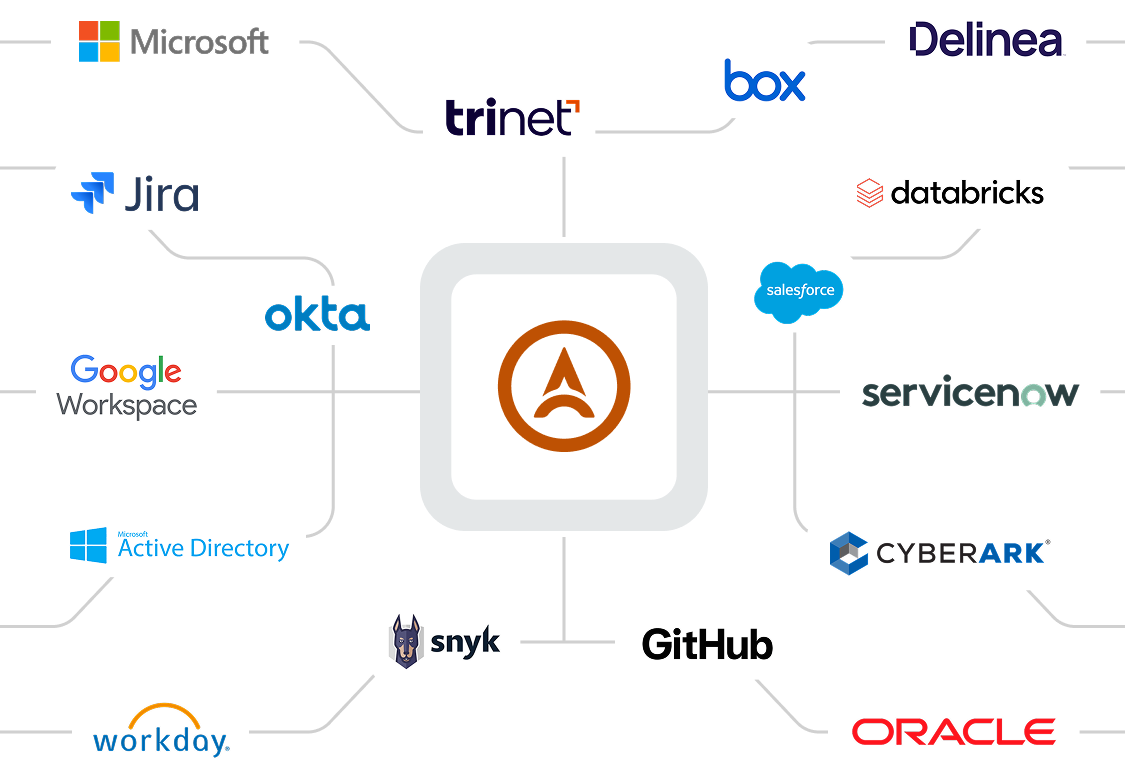
Mesh sits on top of the stack you already have and reads from it — identity providers, HR systems, cloud platforms, secrets managers, PAM, and ticketing. It correlates one identity across all of them. No rip-and-replace, no agents to deploy on every endpoint.
.png)

.png)
A survey of 312 senior security and IT leaders at U.S. enterprises uncovers a consistent gap between perceived identity risk visibility and the ability to act on it when it matters most.
.svg)

Gartner's guidance on using visibility, observability, and remediation to close the unmonitored identity attack surface — courtesy of Axiad.
.png)
Assign a dollar value to your organization’s identity risk with an automated report that quantifies it in financial terms.
.svg)
.svg)
FedRAMP Moderate Authorized (Conductor). Frost and Sullivan Customer Value Leader. Gartner Market Guide Recognized. ISO/IEC 27001. SOC 2 Type II.
Copyright Axiad 2026. All rights reserved.


.svg)